
How do we even start. As I sit down to get some ideas on the page here, I\’m feeling that familiar knot in my stomach and heat rising to my cheeks. It\’s the age old imposter syndrome lighting a little doubt in my mind. Who am I to have the authority to write advice on anxiety and uncertainty. I\’ve been in therapy for years.
I have been fielding many calls and emails about the uncertainty coming at us again as we venture back to school. What if x, or then y. Should I …. would you… I can feel the uncertainty on the phone. That wanting of a plan, a roadmap, something to hold onto to reassure us that it will all be okay in the end.
Guess what?
For me, this is the hallmark of my anxiety. I am not talking about a diagnosed condition like general anxiety disorder, but the general symptom of heightened state of worry, beyond what is normal. I cannot tell you the number of patients coming through my office and on the phone who tell me, \”I managed with these symptoms and really was doing fine and all of a sudden the pandemic has me feeling like the wheels are coming off.\”
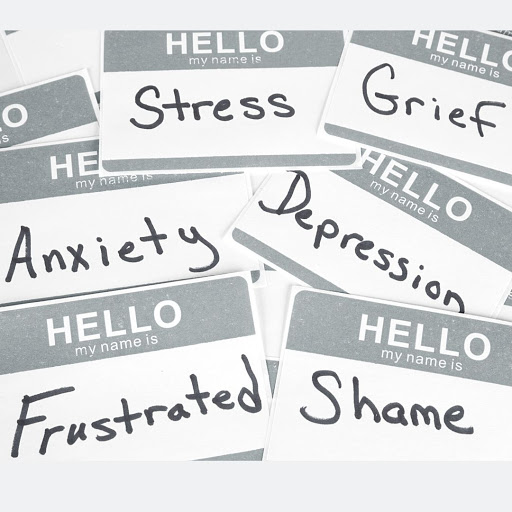
You are not alone.
Let\’s repeat it for those still distracted on Instagram. You are not alone.
There is no right or wrong way for you to be managing your life through this pandemic, but there are some of the things I have learned through the years that may help or spark you to be as successful as possible to maintain your health, your relationships and your joy during times of high stress and uncertainty.
A beautiful friend of mine suggested I read a book by Pema Chodron, called aptly, \”When Things Fall Apart\”. Pema is a Buddhist nun living in Cape Breton, Nova Scotia, and the author of numerous books. This sparked my interest mainly because of my interest and slow introduction to the role and evidence for mindfulness as a treatment for anxiety, and also as a way of life as an antidote to social media.
She writes, \”However, no matter what the size, color, or shape is, the point
is still to lean toward the discomfort of life and see if clearly rather than to protect ourselves from it.\”
I worked so hard over the years to micromanage my life to perfection, accounting for many (ideally every) possible scenario and make continues plans, lists, weighing out possible catastrophes and pitfalls. I travelled with half my suitcase packed in my partners suitcase, days of carry on clothes on board, loads of medications for almost any physical ailment that could occur. Friends and family would be in awe of my preparedness, my organization, my planning.
Because I was not okay with uncertainty. I wanted evidence, options, solutions. I wanted to be prepared for everything. Except that having children, and being married and being a doctor throws that all out the window. Every time something unexpected or last minute or spontaneous would come up, I would get panicky. I didn\’t like being a passenger in a car. Air travel made me nervous. I didn\’t like being on-call overnight and being woken out of the blue with pages. Preparation and planning in the absence of awareness isn\’t healthy. I was too busy thinking through outcomes to lean into my feelings of fear, of uncertainty, of anxiety and recognize them, name then, and move to acceptance. I wanted to fix them.
For me, the pandemic has been a thing of beauty, because it has brought all of the usual triggers for me to light, and really shown me how much growth I\’ve made in the last number of years. Through mindfulness practice, regular exercise, many hours in psychotherapy, and countless books and podcasts, I have a greater respect and understanding of my mind, and how I typically sabotage my own feelings and behaviour.
Major books that facilitated a huge shift for me are listed below. By no means am I an expert, and many of these topics were not well covered in medical school. I am lucky to have gone to McMaster where a large focus of our time were on the Professional Competencies, of managing communication, exploring relationships and self-awareness.
Lessons
The idea that this was going to be anything but a really sh** time is hilarious. We are talking about a global pandemic, market crashing, economy melting, giant disaster. As Brene Brown so beautifully names it in one of her \”Unlocking Us\” podcasts, its a FFT (f***king first time).
Recognize this is hard.
Fear is natural. There is a lot of unknown. Fear is also not a new feeling. Think of other times in your life you were challenged, fearful, and what tools you used to rise out. Or if you struggled previously, looking back, what may have been helpful to ask for?
Control your external stimulus. When you are in that fight or flight response, you are almost hyper-aroused and may get more upset, irritated by other news, social media. Turn off and unplug and get back to basics.
Take care of your body. September is a big trigger month for my worry and mood changes, and so this year, starting in August, I made small changes and incorporated regular exercise into my routine. Planned meal delivery service, discussed back up child care options. You cannot expect to perform well in life if you do not fill yourself with nutritious food and exercise regularly.
Be gentle. With yourself, with others.
Have gratitude. Spend a few minutes each morning and evening saying a quick thank you to the world.
Recognize limits and have boundaries. Saying, no, I am unable to take that on right now, can allow you some space and time to refocus and meditate in your day. In Atomic Habits by James Clear, he talks about making good habits easy and incorporating them into your day only two minutes at a time.

1. The Mindful Way Through Depression: Freeing yourself from Chronic Unhappiness
2. A New Earth, by Eckhart Tolle
3. The Four Agreements
4. Dare to Lead by Brene Brown.
5. High Performance Habits by Brendon Burchard
6. Atomic Habits by James Clear
7. With the End in Mind by Kathryn Mannix
 Dr. Lorraine Sharp
